Empowering pre-diabetic users
through behavioral nudges and personalized health insights using AI
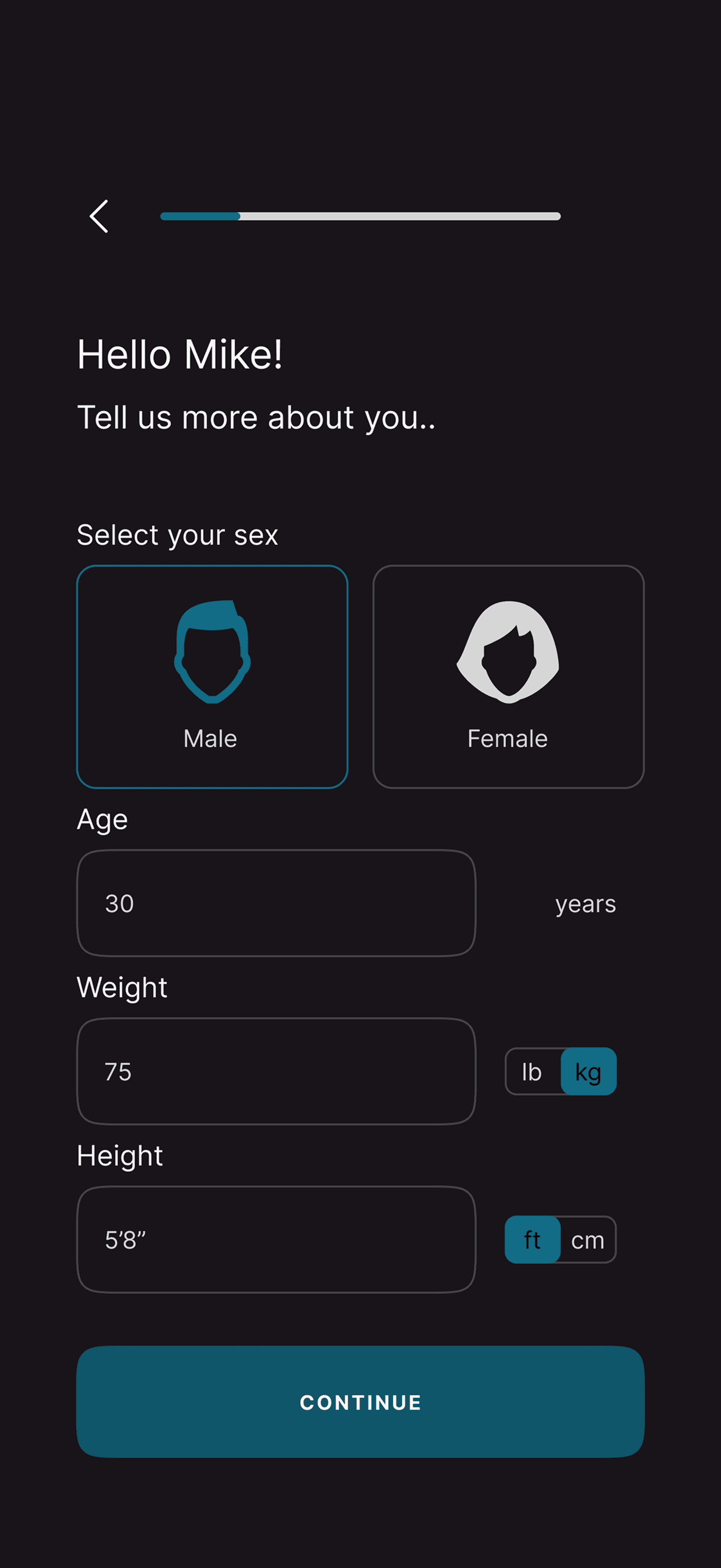
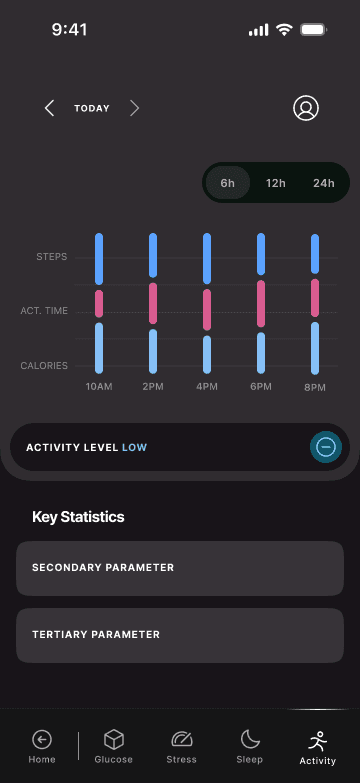
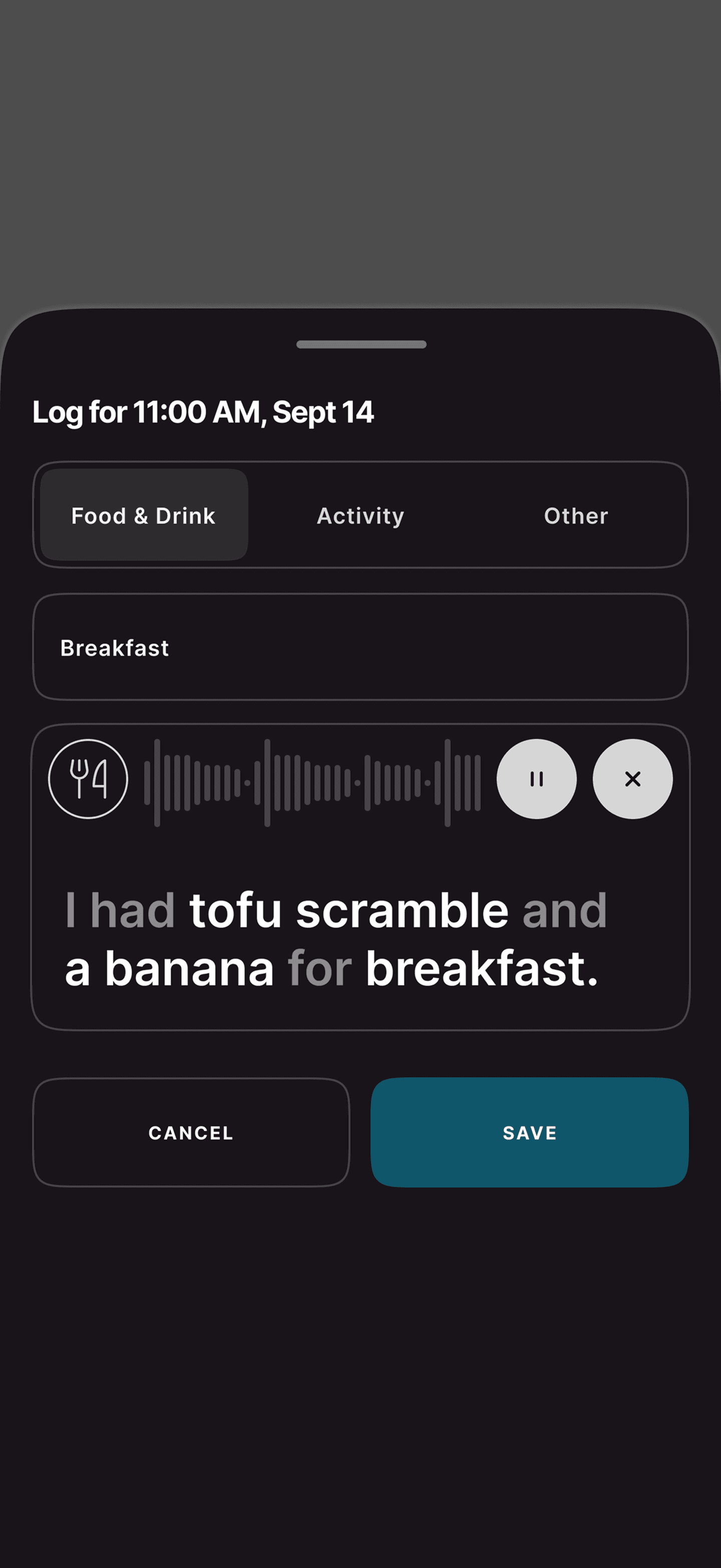
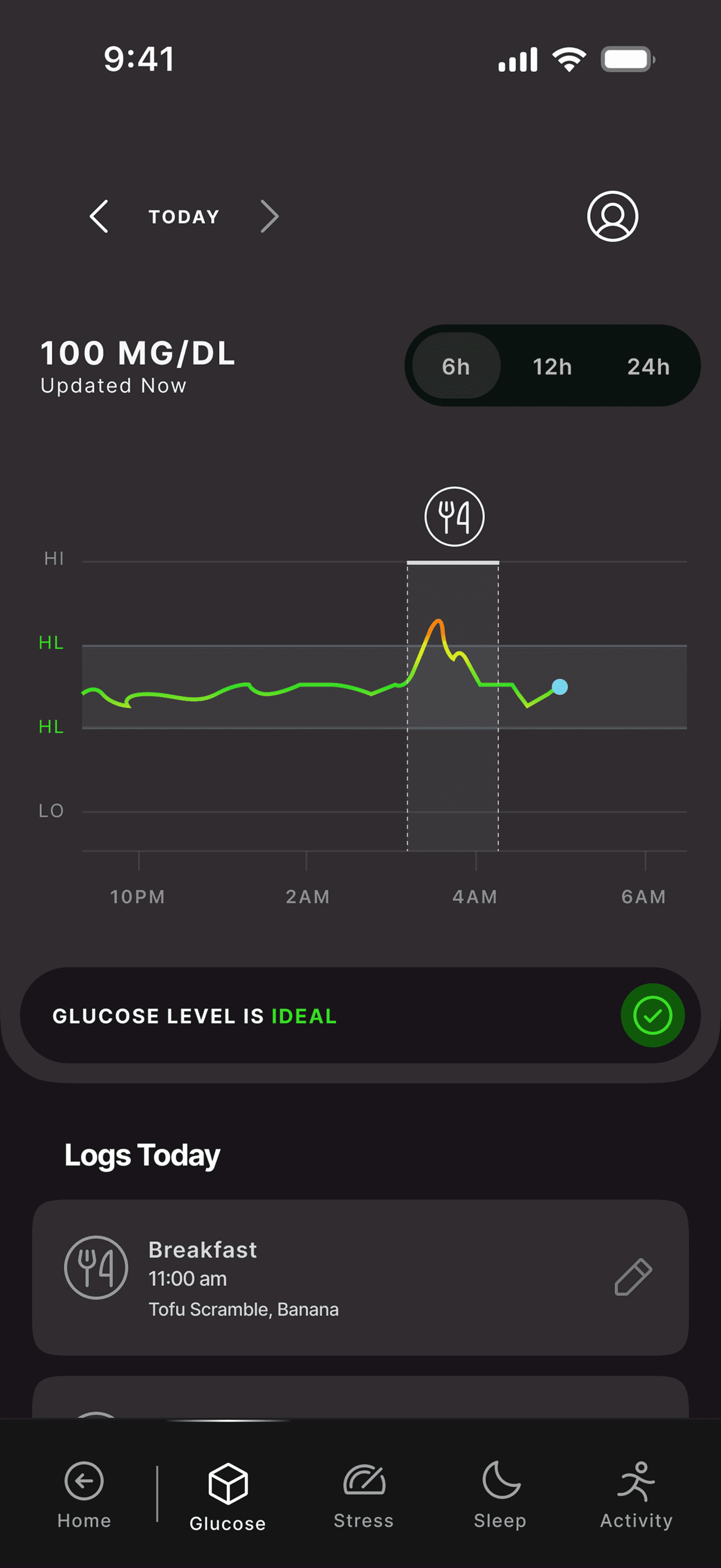

Company
SynchNeuro Inc.
Team
Co - Founders
Product Manager
Data Scientist
Marketing
Medical Professionals
Role
Product Design Intern
As founding designer in this early-stage startup, I was responsible to define end-to-end user experience: research to concept to prototype. Working with a team I ensured the idea is grounded in user needs and clinical insights, in both discovery and design phase.
Overview
Increased risk
of diabetes due to a disconnect from one's health data
THE PROBLEM
1 in 3 adults
nearly 32.8 M, in the US suffer from pre-diabetes
CURRENT SCENARIO
Metabolic growth
with real-time personalized insights in everyday life
THE INTENT
Given the complexity and uniqueness of the technology; using brain signal to determine and predict glucose levels; the project is worked in two phases, discovery and design.
Approach
In the first phase I tried to understand behaviors, pain points, and expectations of target users to guide a personalized platform, with initial concept testing. It started with an extensive study consisting of
Domain Study & Competitive Analysis
Explored existing chronic disease management and metabolic health tools to identify common patterns and gaps.
Primary Research
Conducted interviews with individuals recently diagnosed with pre-diabetes, and healthcare providers.
This led to breaking down the design process, based on underlying factors, because the main challenge faced was
“
How do we bring
clarity into complexity?
”
Categories
Terminologies
AI-generated data
Functions wrt UX
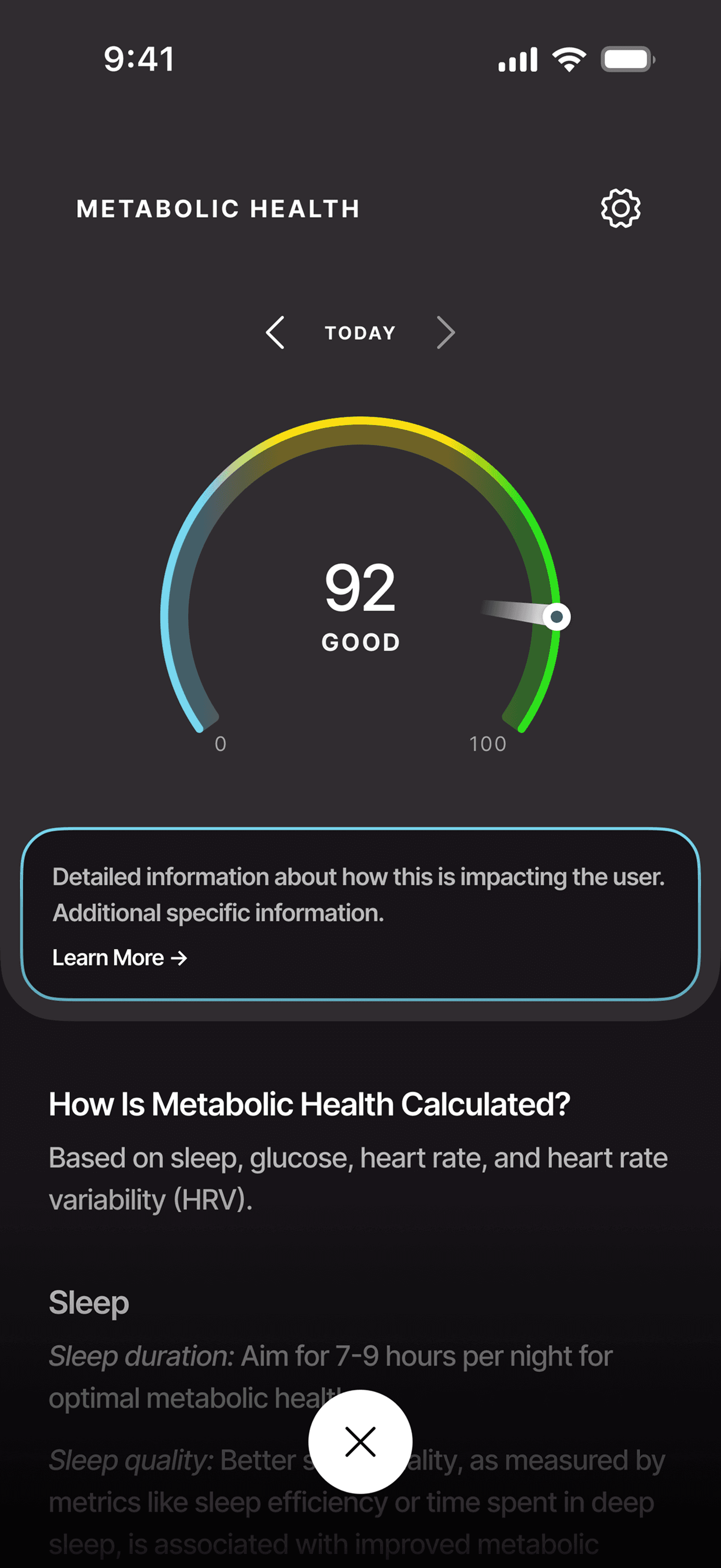
Metabolic health management
Actionable insights
Personalized recommendations
Micro-progress
Research Study
Based on the initial data and conceptualisation, a moderated research study is conducted with the aim to validate early directions.
Focus Group
Semi-structured prompts & guided Q&A to understand current approaches to managing prediabetes and test comprehension of language.
Usability Testing
Moderated usability testing (MUST) & System Usability Scale (SUS) to assess navigation, copy and task completion rate of four key functions.

Task 01

Task 02

Task 03

Task 04
Insights Driven Design
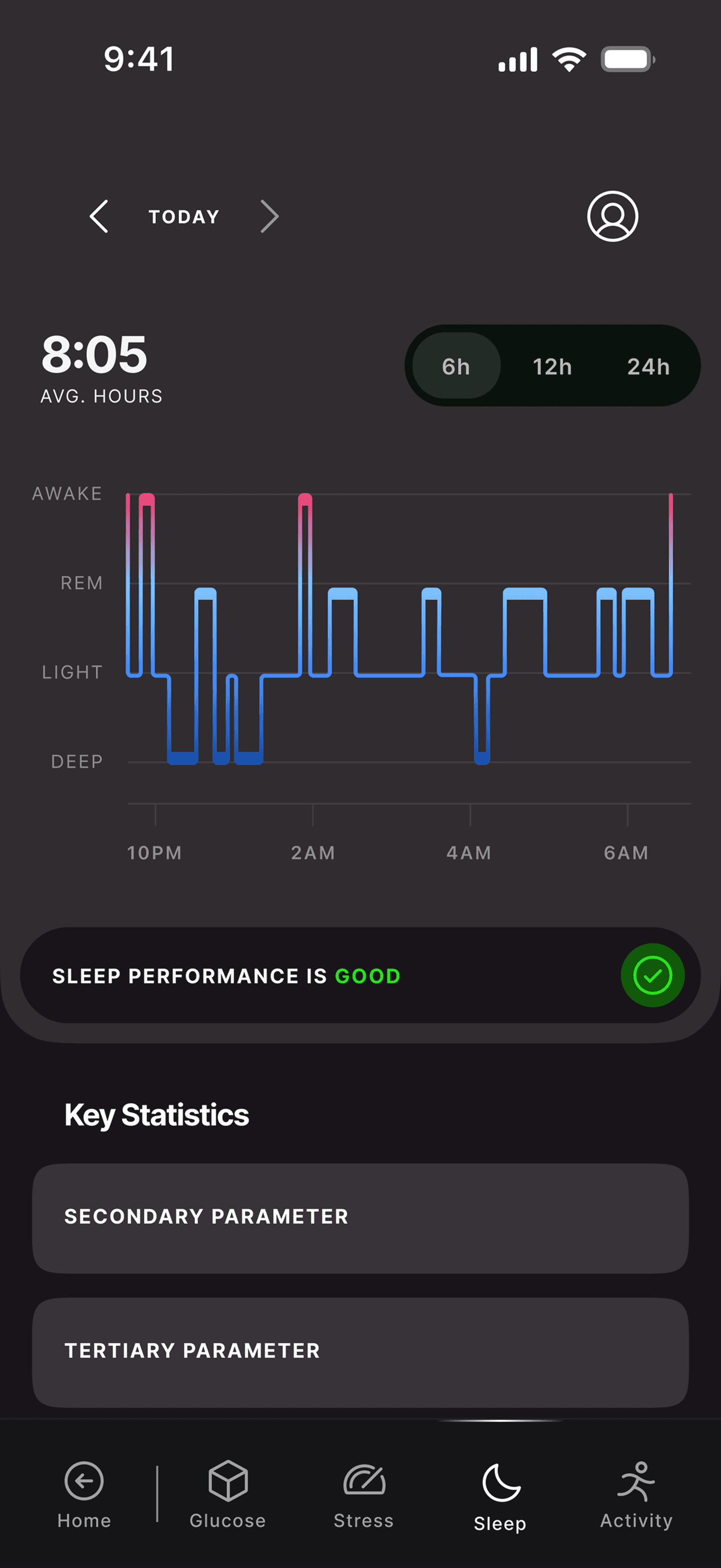
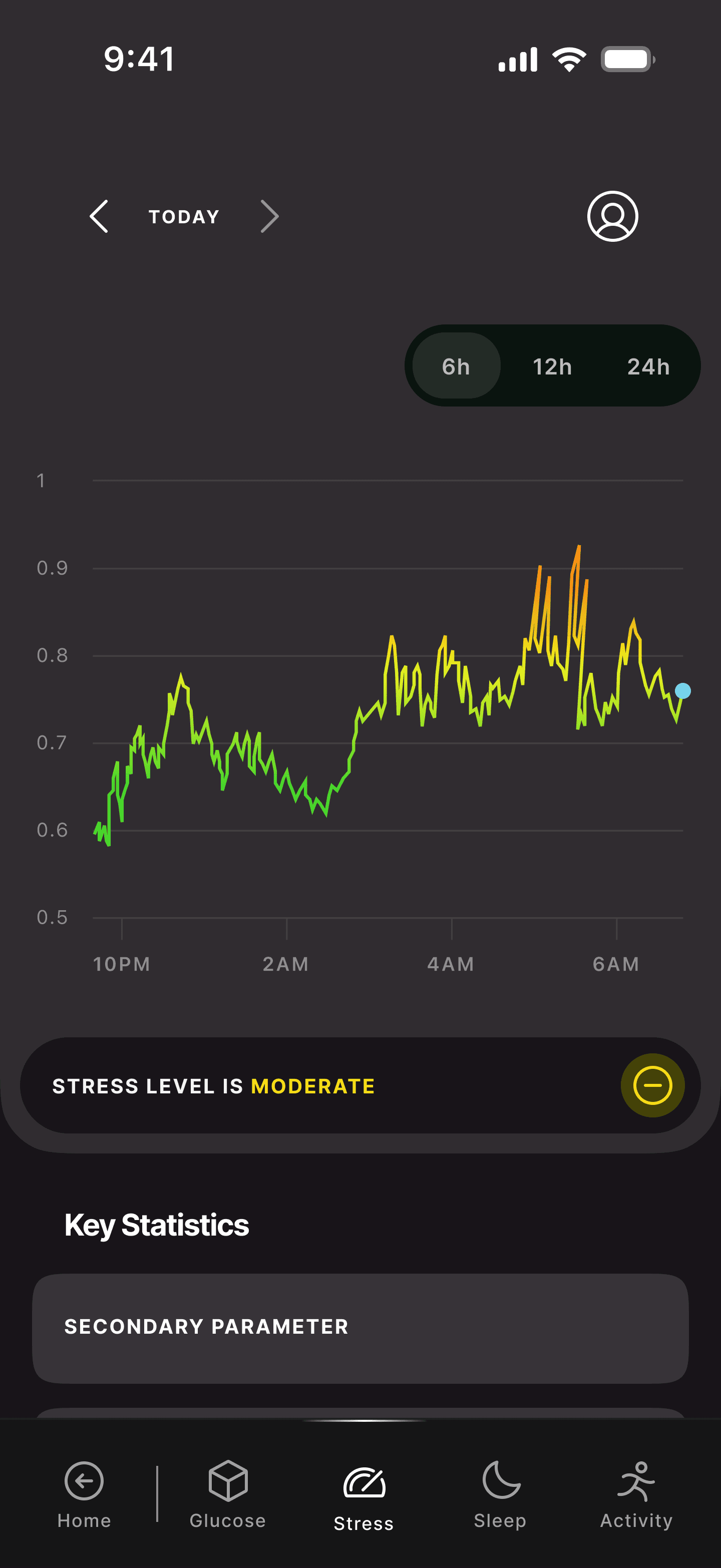
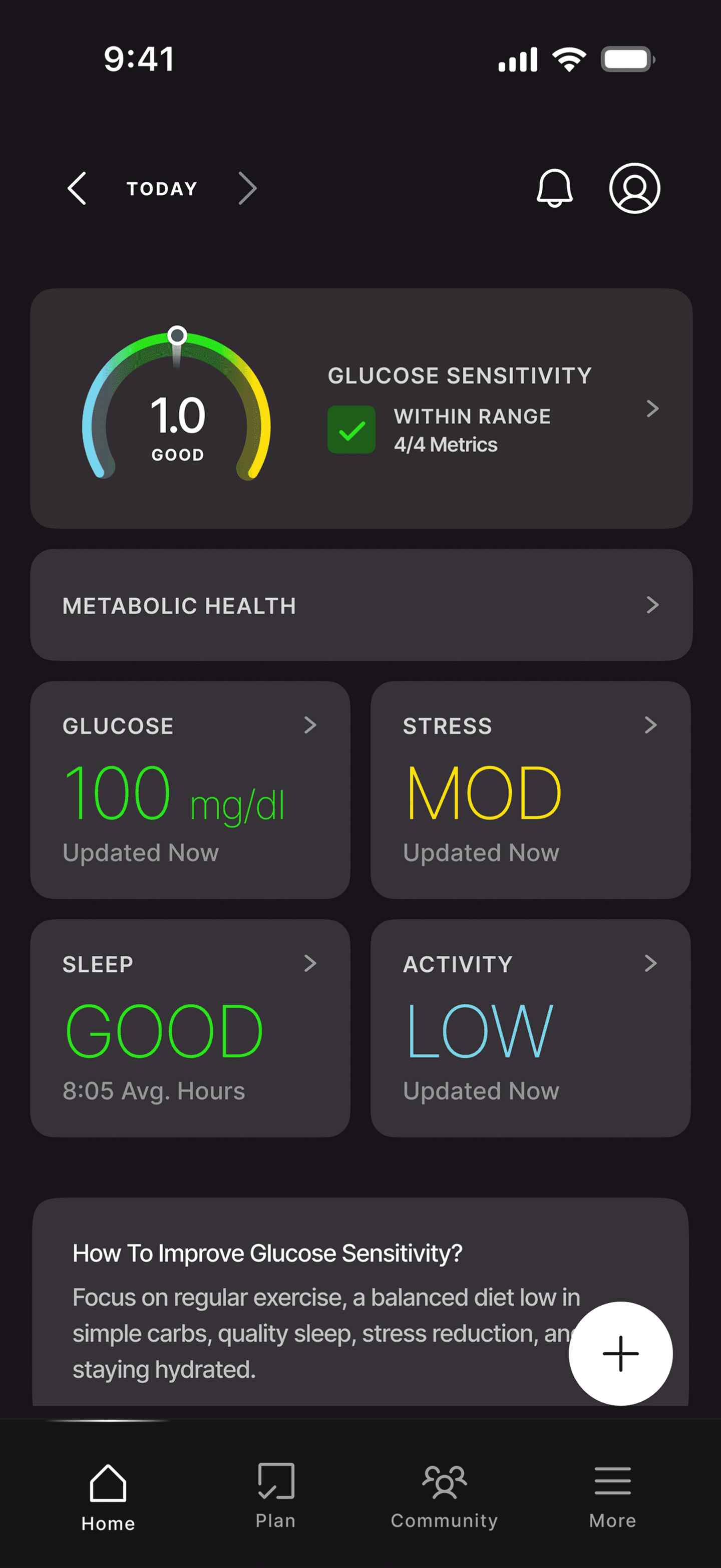
The second phase is focused on refining system architecture with prototypes, by translating early research into artifacts, validated through the study. Along with a team, I translated the insights into tangible design directions, focusing on aspects that drive metabolic health.
63%
found health-related copy too clinical, yet approved terminologies
Behavior linked tips
were preferred over generic ones, especially for AI predictions of glucose levels
9 of 10
faced navigation issues in at least one task
70%
reported logging fatigue, especially for meals and symptoms
Only 30%
would stay over 2 weeks without progress metrics
5 of 8
were unaware of influences on categories and sensor’s role
Simultaneous iterations based off multiple pain points, led to the generation of three versions of the application. This is since then taken into the next round of usability testing and development.
Results
The design decisions impacted as
improvement
in system usability issues identified with early testing
UX +
business
strategies aligned
with collaboration of 06 cross-functional teams
features
designed and validated, backed with AI-native functionality
Know More
Let’s
work together
I'm currently available for full time roles. Let me know if you're looking for a designer. On to the next big thing!